
How to Find Local Keywords for SEO Success
Unlock local SEO success by mastering effective keyword research. Learn how to find the best local keywords to boost visibility and drive traffic.
Sean Hall
5/14/20267 min read


How to Find Local Keywords for SEO Success: A Direct Guide to Geo-Targeted Keyword Research
By Sean Hall, SERP & Co
Written by Sean Hall, Co-Founder of SERP & Co — local SEO specialist with 8+ years of experience helping small businesses in St. Helens, Oregon, Columbia County, and the greater Portland metro area dominate local search. Sean has conducted keyword research for businesses across the PNW and beyond, identifying high-value local search terms that drive real inquiries. Connect with Sean on LinkedIn or visit serpandco.com/about.
Why Trust This Guide?
The keyword research methods in this guide are based on real SERP & Co client campaigns, validated against Google Search Console data, BrightLocal's Local Search Trends Report, and Moz's Local Search Ranking Factors.
Finding local keywords is essential for businesses aiming to enhance their online visibility and attract nearby customers. Local keywords are search terms that include geographic locations, making them crucial for "local SEO" strategies. This article will guide you through the process of identifying and utilizing local keywords effectively, ensuring your business stands out in local search results. Many businesses struggle to connect with their local audience, leading to missed opportunities for engagement and growth. By implementing effective local keyword strategies, you can drive targeted traffic and generate valuable leads. We will explore the significance of local keywords, the tools available for research, competitor analysis, and best practices for implementation.
What Are Local Keywords and Why Do They Matter for SEO?
Local keywords are specific search terms that include geographic identifiers, such as city names or neighborhoods. They play a vital role in local SEO by helping businesses connect with potential customers in their vicinity. By optimizing for local keywords, businesses can improve their visibility in search engine results, making it easier for local customers to find their products or services. The importance of local keywords cannot be overstated, as they directly impact search rankings and can significantly influence consumer behavior. When users search for local services, they often include location-based terms, which means that businesses that effectively utilize these keywords can attract more relevant traffic.
Implicit vs. Explicit Local Keywords
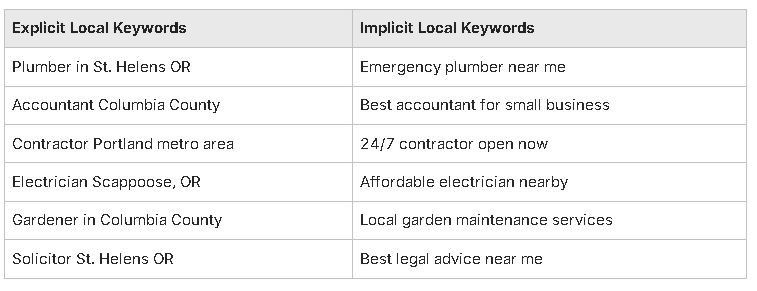
Understanding the difference between explicit and implicit local keywords is crucial for a comprehensive local SEO strategy.
Explicit Local Keywords
These keywords explicitly include a geographic location in the search query. Examples include "plumber in St. Helens OR" or "accountant Columbia County." These terms clearly indicate the user's intent to find services within a specific area.
Implicit Local Keywords
Implicit local keywords do not mention a location but carry local intent. For example, "emergency plumber near me" or "best accountant for small business" imply the user is looking for nearby services without specifying a location. Google's Possum and Pigeon algorithm updates have enhanced the ability to trigger local pack results for these implicit queries, making it essential for businesses to optimize for both explicit and implicit keywords.
How Local Keywords Drive Relevant Traffic and Lead Generation
Local keywords are instrumental in driving relevant traffic to your website, as they target users actively searching for services in their area. By incorporating these keywords into your content, you enhance the relevance of your website, leading to higher engagement rates. This targeted approach not only increases website visits but also improves the likelihood of converting visitors into leads. Engaging with the local community through content that resonates with their needs fosters trust and loyalty, ultimately benefiting your business. For local businesses, leveraging local keywords is a strategic way to connect with potential customers and generate leads effectively.
Further emphasizing the impact of local optimization, research highlights its critical role for retailers in boosting organic traffic and improving placement in Google's Local Pack.
Local Optimization for Retailers: Google Local Pack & Organic Traffic The Purpose of the presented research is to substantiate the importance of the local optimization of the retailer’s business for search engines to increase organic traffic; to represent insights and give practical recommendations for retailers regarding local optimization of their business in Google as part of an effective marketing strategy; to create the typical valid data micromarking (by the example of the Ukrainian retailer), which will contribute to an advantageous placement in the Local Pack in comparison with competitors, and increase organic traffic and conversion.
Business optimization in the digital age: Insights and recommendations, A Natorina, 2020
Lead Generation offers services that can help local businesses optimize their online presence through effective keyword strategies. By focusing on local keyword research, businesses can enhance their visibility and attract more customers.
Near Me and Voice Search Keywords
“Near me” searches have surged dramatically, growing over 500% in recent years according to Google Trends. This growth reflects the increasing use of mobile devices and voice assistants, where users seek immediate, local solutions.
Voice search queries tend to be longer and more conversational than typed searches. For example, a user might ask, “Who is the best plumber near me open on Saturday?” rather than typing a short phrase. This shift requires businesses to adapt their keyword strategies to capture these natural language queries.
To optimize for “near me” and voice search keywords, ensure your Google Business Profile (GBP) is fully complete and up to date, including accurate hours, services, and contact information. Use natural language in your website content and add FAQ sections with conversational questions and answers that reflect how people speak.
Worked Example: A locksmith in St. Helens, OR could target the keyword phrase “emergency locksmith near me open now” by:
Ensuring their GBP lists 24/7 availability and emergency services.
Creating a FAQ page answering questions like “Are you open for emergency locksmith services on weekends?”
Including natural language content on their homepage and service pages that mention emergency locksmith services and St. Helens, OR location.
Which Tools Deliver the Best Results for Local Keyword Research?
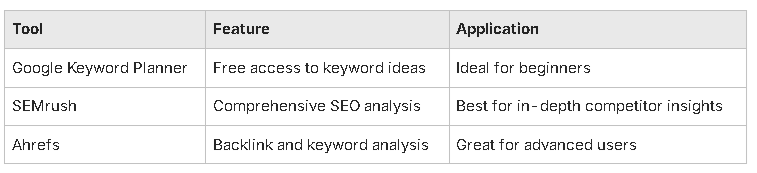
Several tools can assist in conducting effective local keyword research, each offering unique features to enhance your SEO strategy. Here are some of the top tools available:
Google Keyword Planner: A free tool that provides keyword ideas and search volume data, helping you identify local keywords relevant to your business.
SEMrush: A comprehensive SEO tool that offers keyword research, competitor analysis, and tracking capabilities, making it ideal for local SEO strategies.
Ahrefs: Known for its robust backlink analysis, "Ahrefs" also provides keyword research tools that can help identify local search terms.
These tools can significantly streamline your local keyword research process, allowing you to focus on optimizing your content effectively.
Comparison of Local Keyword Research Tools
To better understand the features of these tools, here’s a comparison:
This comparison highlights how different tools can cater to various needs in local keyword research, allowing businesses to choose the best fit for their strategies.
How to Analyze Competitor Keywords to Uncover Local SEO Opportunities
Analyzing competitor keywords is a crucial step in uncovering local SEO opportunities. By examining the keywords that competitors rank for, you can identify gaps in your own strategy and discover new local keywords to target.
Step-by-step approach:
Use Google Maps to find top-ranking local competitors by searching for your main service plus location (e.g., “solicitor St. Helens OR”). Note the businesses that appear in the Local Pack and organic results.
If you have access to Google Search Console data for your own or client accounts, review the keywords driving traffic to competitor sites if shared via agency access or partnerships.
Use keyword research tools like SEMrush or Ahrefs to analyze competitor websites and identify their ranking keywords.
Explore Google’s “People Also Search For” and “Related Searches” features at the bottom of search results to find additional keyword ideas and gaps your competitors may not be targeting.
Worked Example: A St. Helens, OR solicitor analyzing a competitor’s Google Business Profile and website might find these 5 keyword gaps:
“Family law solicitor St. Helens OR”
“Conveyancing services Columbia County”
“Wills and probate St. Helens OR”
“Employment law advice near me”
“Affordable legal advice for small businesses”
Targeting these gaps with tailored content and local optimization can help the solicitor capture additional local search traffic.
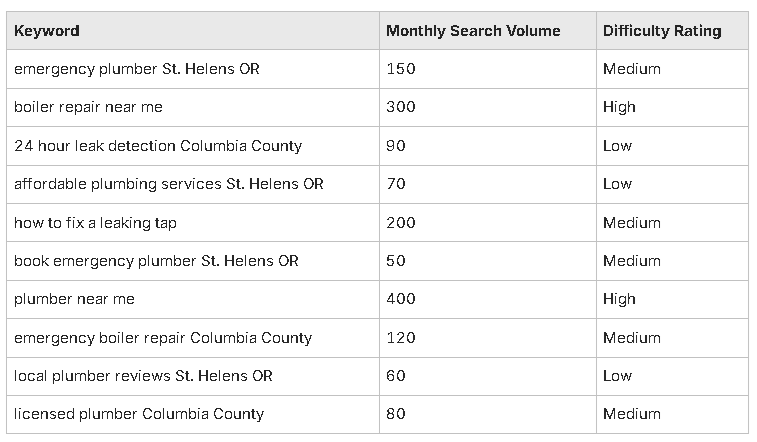
Local Keyword Research Worked Example
Let’s walk through a full local keyword research example for a fictional business: Mike's Plumbing, based in St. Helens, Oregon.
Seed Keywords Identified: plumber, emergency plumber, boiler repair, leak detection.
Tool Used: Google Keyword Planner to generate keyword ideas and search volume data.
Long-tail Variations Found: “emergency plumber St. Helens OR,” “boiler repair near me,” “24 hour leak detection Columbia County,” “affordable plumbing services St. Helens OR.”
Intent Classification: Informational (e.g., “how to fix a leaking tap”), Transactional (e.g., “book emergency plumber St. Helens OR”).
Final Keyword List:
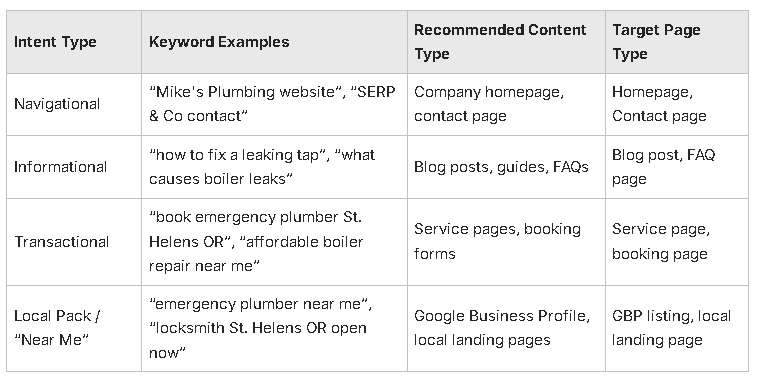
Expanded Keyword Intent Mapping
Mapping keywords to user intent helps create targeted content that meets searcher needs effectively. Below is an expanded table with four intent types, keyword examples, recommended content types, and target page types.
How to Analyze and Select Effective Local Keywords for Your Business
Selecting effective local keywords involves evaluating keyword difficulty, understanding search intent, and incorporating these keywords into your overall strategy. Begin by using keyword research tools to assess the competitiveness of potential keywords. Focus on keywords that align with your business offerings and have a clear local intent. Understanding the search intent behind keywords is crucial; for instance, users searching for "best coffee shop in [city]" are likely looking for immediate options. Once you have identified suitable keywords, integrate them into your website content, meta descriptions, and local listings to enhance your visibility in search results.
What Are the Best Practices to Implement Local Keywords for SEO Success?
Implementing local keywords effectively requires adherence to best practices that enhance your SEO efforts. Here are some key strategies:
Optimize Your Google Business Profile: Ensure your business information is accurate and includes relevant local keywords.
Create Location-Specific Content: Develop content that speaks directly to your local audience, incorporating local keywords naturally.
Utilize Local Listings: Ensure your business is listed in local directories and that your information is consistent across platforms.
By following these best practices, you can maximize the impact of your local keyword strategy and improve your overall SEO performance.
Key Takeaways
Use both explicit and implicit local keywords to capture a wider range of local search intent.
Research competitor keywords thoroughly to identify gaps and new opportunities.
Target “near me” and voice search queries by optimizing your Google Business Profile and using natural language content.
Map keywords to user intent before creating content to ensure relevance and effectiveness.
Build a comprehensive keyword list before writing any page to guide your SEO strategy.
Track your keyword rankings monthly to monitor performance and adjust tactics.
Update your keyword strategy quarterly to stay aligned with changing search trends and algorithms.


Got questions? We actually answer them.
Built to rank. Designed to convert. Made to grow.
Sean@SERPandco.com
© 2026. All rights reserved.
SERP & Co is a local digital marketing agency in St. Helens, Oregon, helping local service businesses get found on Google through local SEO, web design, Google Business Profile optimization, and content marketing.
(971)225-6947